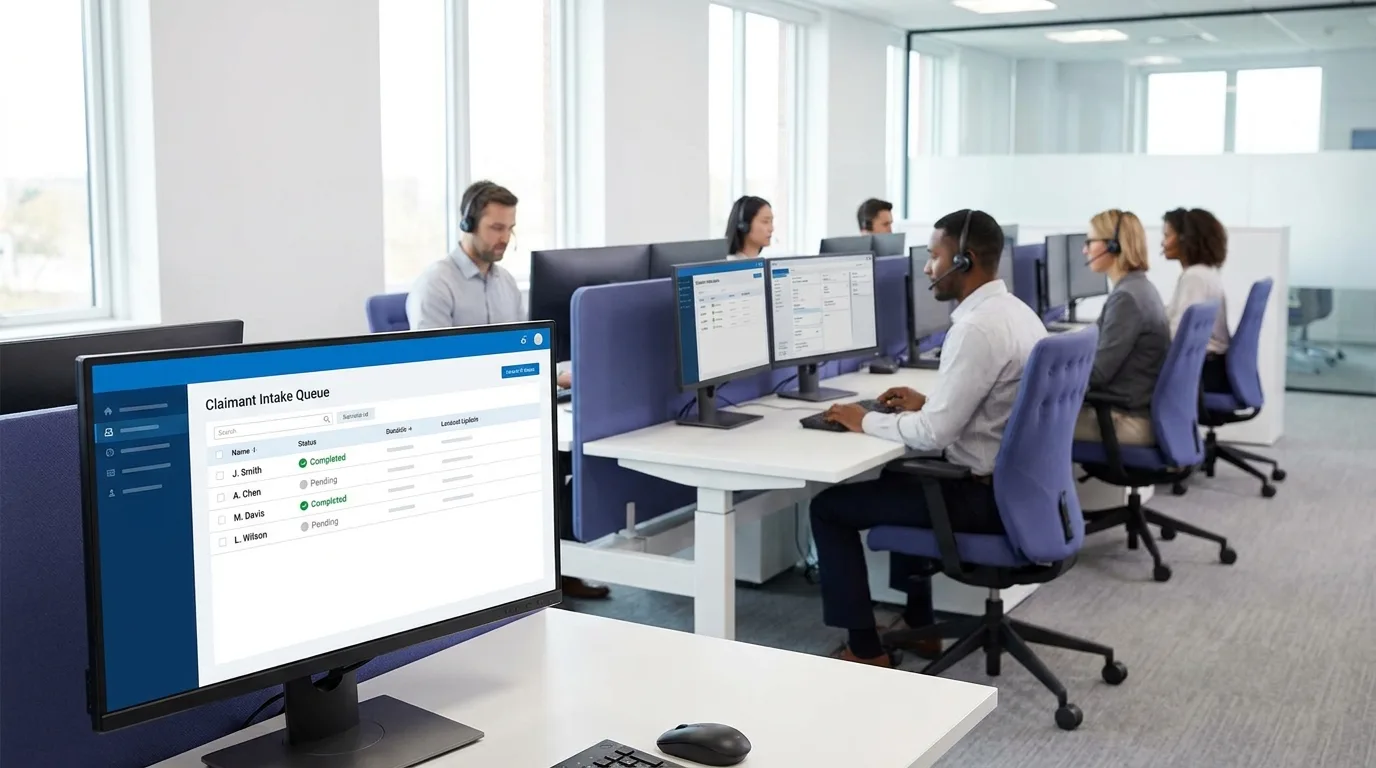
Automate Workers' Comp Intake with Voice AI — First Report to Case File
Vokalith conducts structured workers' compensation intake interviews, captures injury details and medical history, and delivers complete case files directly to your claims team.
85%
Reduction in manual intake effort
100%
Required fields captured per intake
3×
Faster case file creation
The Challenge
Why manual intake fails here
Workers' compensation intake is complex — combining injury documentation, medical history, employer information, and regulatory requirements into a single intake record. Manual processes introduce errors and delays at every step.
Complex injury documentation
Workers' comp intake requires detailed injury narratives, body part identification, and mechanism of injury — all prone to missing data when collected manually.
Employer coordination
Coordinating between injured workers, employers, and medical providers manually creates communication gaps and delays.
Regulatory compliance
Jurisdiction-specific requirements mean intake must capture the right fields for each state — difficult to enforce consistently in manual processes.
Return-to-work tracking
Monitoring return-to-work status and functional capacity manually creates gaps in case progression.
How Vokalith Helps
What the automated workflow looks like
Structured injury interview
AI conducts a complete intake interview — date, time, location, mechanism, body parts affected, prior conditions, medical treatment — collecting all required fields.
Jurisdiction-adaptive logic
Interview branching adapts to the relevant jurisdiction, ensuring state-specific requirements are captured at the point of intake.
Claims system integration
Structured intake records are written directly to your workers comp management system with all required fields populated.
Follow-up automation
AI conducts scheduled follow-up interviews to capture treatment updates, functional status, and return-to-work milestones.
Capabilities
What's included
- Structured injury intake interviews
- Jurisdiction-adaptive questioning
- Medical history collection
- Employer information capture
- Claims system integration
- Return-to-work follow-up automation
- Audit-ready interaction records
Related
Related Use Cases
Insights