The TPA Capacity Problem in 2026
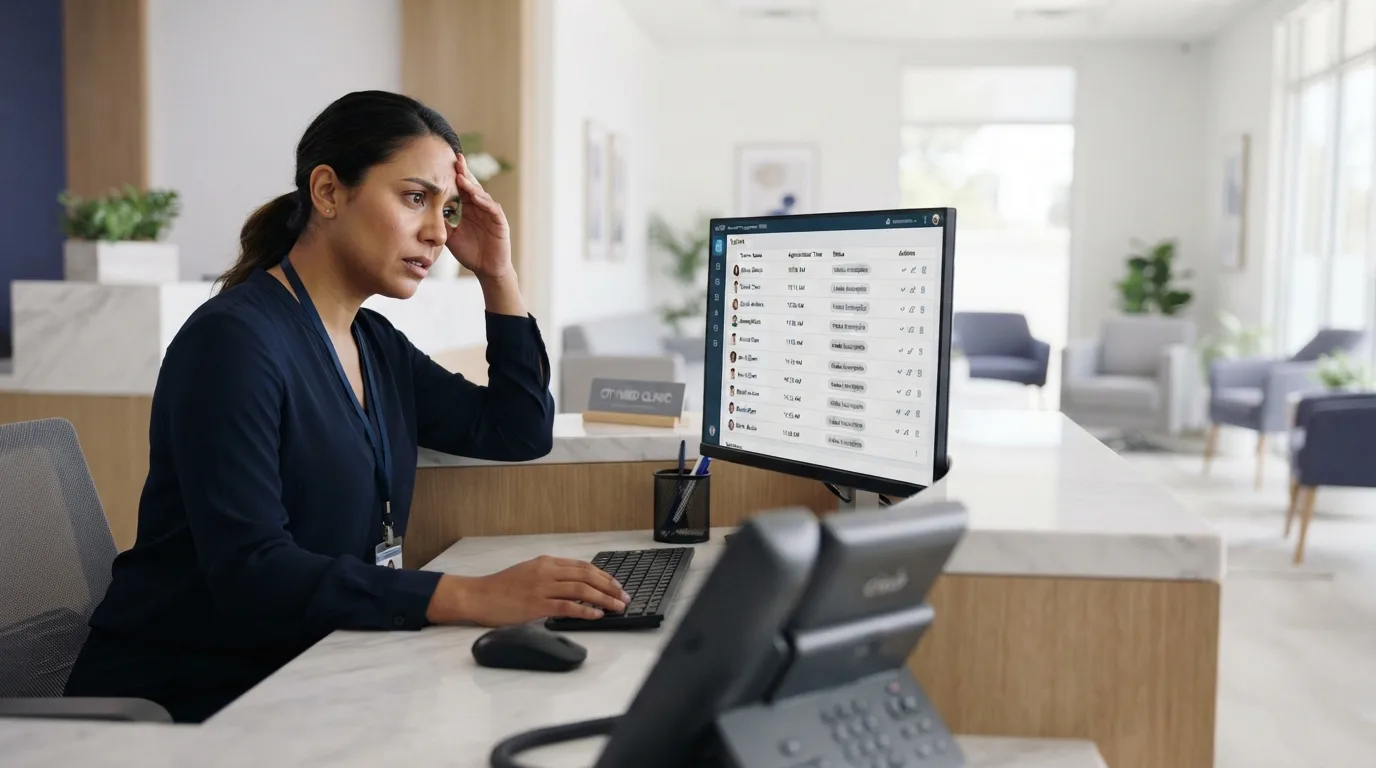
Third-party administrators handling workers' compensation, auto liability, and disability claims are operating in one of the most demanding environments in recent memory. Claim volumes have risen steadily since 2023. Qualified claims examiners remain difficult to recruit and retain. And referral sources — insurers, self-insured employers, and captives — are applying increasing pressure on turnaround times and SLA performance.
The traditional response to rising volume has been to hire. More examiners, more intake coordinators, more administrative support. But in a tight labour market, hiring is slow, expensive, and uncertain. A TPA that needs to process 30 percent more claims this quarter cannot wait three months to recruit and onboard two new examiners. And even if it could, the underlying unit economics of the business do not improve — costs rise with volume, and margins stay flat.
The TPAs growing successfully in 2026 are not growing by adding headcount proportionally to volume. They are growing by changing what their existing headcount spends time on — and voice AI intake is the primary mechanism making that shift possible.
Where TPA Time Currently Goes
A detailed breakdown of how time is spent in a typical TPA claims operation reveals a consistent pattern: a disproportionate share of examiner and coordinator time is consumed by activities that precede the actual claims work. Outbound claimant contact, appointment scheduling, interview confirmation, intake data entry, and report preparation collectively account for between 35 and 55 percent of total operational time in most mid-size TPA operations.
This is not time spent on coverage analysis, reserve setting, litigation management, or referral source communication — the activities that require experienced claims professionals and that directly determine the quality of outcomes. It is time spent collecting, recording, and formatting information that a well-configured AI system can handle without human involvement.
The leverage available from automating these activities is substantial. An examiner who currently spends 40 percent of their time on intake-related tasks and has that time returned to substantive claims work does not simply become 40 percent more productive — they become meaningfully more effective at the work that actually matters, because they have more time and attention to give to complex files.
What the Operational Shift Looks Like
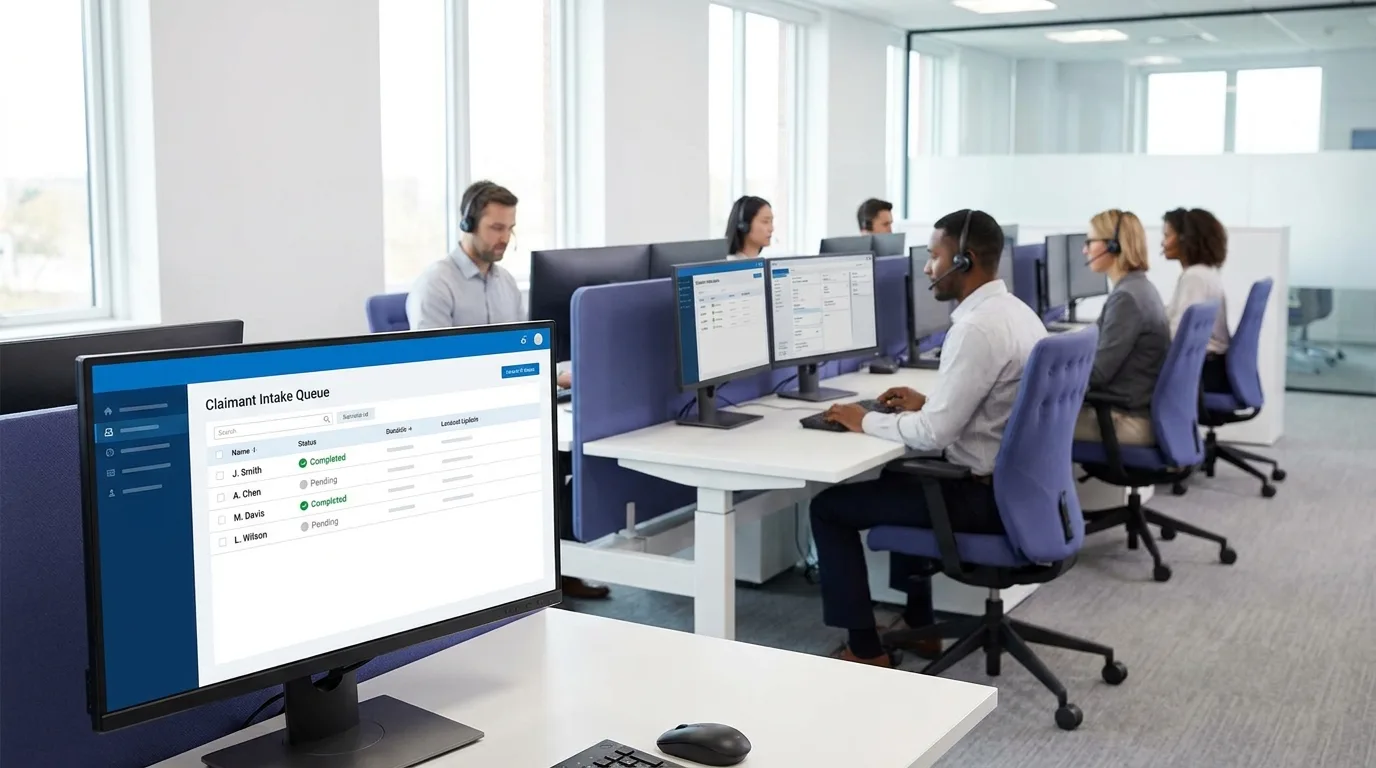
When voice AI handles claimant outreach, interview scheduling, intake conduct, and report generation, the examiner's workflow changes materially. Rather than beginning each day with a queue of outbound calls and a backlog of intake notes to process, the examiner begins with a queue of completed, structured intake records — voice interviews that have already been conducted and formatted into reports that are ready for review.
The time previously spent on outbound contact alone — typically four to six hours per week per examiner — is recovered for substantive file work. The consistency of AI-conducted interviews means that intake records are complete and uniform, reducing the follow-up calls that incomplete manual intakes require. And because reports are generated automatically after each interview, the documentation backlog that previously extended turnaround times disappears.
For the TPA as a business, the effect compounds. The same examiner headcount can manage a materially higher case load without working longer hours, because the hours they were previously spending on intake overhead are now available for claims decisions. A team of ten examiners that previously managed 800 active files can manage 1,200 or more with the same staffing — not by working harder, but by working on the right things.
What the Numbers Look Like After Deployment
TPAs deploying voice AI intake across their claimant interview and reporting workflows consistently see significant improvements in throughput, turnaround, and examiner productivity.
3×
More claims processed per examiner
55%
Reduction in intake-related examiner time
48hrs
Faster average time to first interview
40%
Improvement in SLA compliance rate
Referral Source Relationships and Competitive Positioning
The operational improvements from voice AI intake have a direct commercial dimension for TPAs. Referral sources — insurers, employers, and captives — choose TPAs primarily on the basis of turnaround time, communication quality, and SLA performance. All three of these are directly improved by voice AI intake: first interviews happen faster, intake records are more complete, and reports reach referral sources sooner.
TPAs that can credibly demonstrate faster time-to-first-interview and higher SLA compliance rates as a consequence of AI deployment have a differentiated value proposition in a market where most competitors are offering similar services at similar price points. The operational capability becomes a commercial advantage.
The investment required to deploy voice AI intake in a TPA operation is modest relative to the hiring cost it displaces. A TPA that would otherwise need to hire two additional examiners to handle a volume increase can deploy voice AI intake in weeks, at a fraction of the annual cost of two full-time equivalents, and achieve the same or greater throughput gain. In 2026, for TPAs facing volume growth and a tight labour market simultaneously, voice AI intake is not a technology experiment — it is an operational necessity.